Like a vault, our minds hold onto certain things. Precious, perhaps trivial to others and maybe even a bit ridiculous to us, collecting ephemera, as I’ve come to understand, is a way of defining your style and continually evolving with the things around you.
Lately, I’ve been drawn to the questions of how we form our taste, how we train our eye, and whether we still feel that hunger to dig deeper into the archives and corners where few people look. That’s often where we find ourselves, I think. In the search and in the act of uncovering, we shape a point of view that’s unmistakably our own. And, in doing so, we awaken our curiosity and appetite for creation.
Playful, rare, and full of the things we love, our first edition of A TASTE OF explores the hidden histories and ephemera that shape Celia Phillips of Sacrificium Laudis’ world. I’m in Paris, she’s in Athens, and we’re chatting over video, but it feels like we’re exploring the same rabbit hole of discoveries - so many corners I’d never known. I hope you enjoy diving into Celia’s world as much as I did!
Based in Athens, Celia founded Sacrificium out of a love for fashion’s stranger histories. After working as a design assistant and pattern cutter, then teaching at the Glasgow School of Art, she turned her attention to curating the surrealist magic of ’80s and ’90s fashion. Think Romeo Gigli’s romance, Sybilla’s dreaminess, or the wild imagination of Miyake, Tatsuno, and Kumagai. Through Sacrificium, she captures the mystery and emotion of that era, offering a glimpse into a world where clothing still feels like alchemy.
Take us back to the beginning. How did you fall into fashion and when did the world of 80s and early 90s editorials, runways, and designers first catch your eye?
I grew up in Hamilton, New Zealand, so quite removed from the world of fashion, really. Luckily, I realised the local library bought all the issues of i-D and The Face magazines, so I would obsessively look through them. The world of London street style seemed very far away and was fascinating. My family also has a holiday home in Turangi, close to the national park, and strangely the tiny library there would get in all the Vogues — and there was no competition for them, no one else was interested — so I would get them all out and read them while my parents were trout fishing!
I used to make a lot of my own clothes from around 15. I was desperate to go to fashion school, which my parents deeply disapproved of. After a Film and Media Studies degree, which I had little interest in but did to appease my parents, I then studied Fashion Design. After that, I had my own label for a few years, selling in a couple of NZ boutiques before leaving to try the UK and Europe. More recently, I worked for a Glasgow-based artisanal fashion label, where we sold to a lot of Japanese stores as well as some in Europe and Australia. After that came to an end, I spent some time teaching at Glasgow School of Art in the Fashion Department. I then started Sacrificium, which I focus on full-time. Now I am in Athens.
Can you share an interview/article you love, a runway you can’t forget, a clipped label from a garment, or a tiny fragment of text?
Olivier Guillemin’s S/S 1990 collection has always been a favorite of mine, it is so mysterious and esoteric especially the unusual jewelry pieces that cover the face and body - it reminds me of something perhaps an alien tribe might wear, it is like a medieval scifi fantasy, it really transports you to a fantasy place. Olivier Guillemin studied at Studio Berçot and they had the most amazing graduate runways shows in the 80s - pure creativity.
I also really love Lecoanet Hemant’s Algae collection - a sea nymph dream, the beautiful floating silks and textures. I love the idea of being dressed like a piece of algae or seaweed floating in the sea.
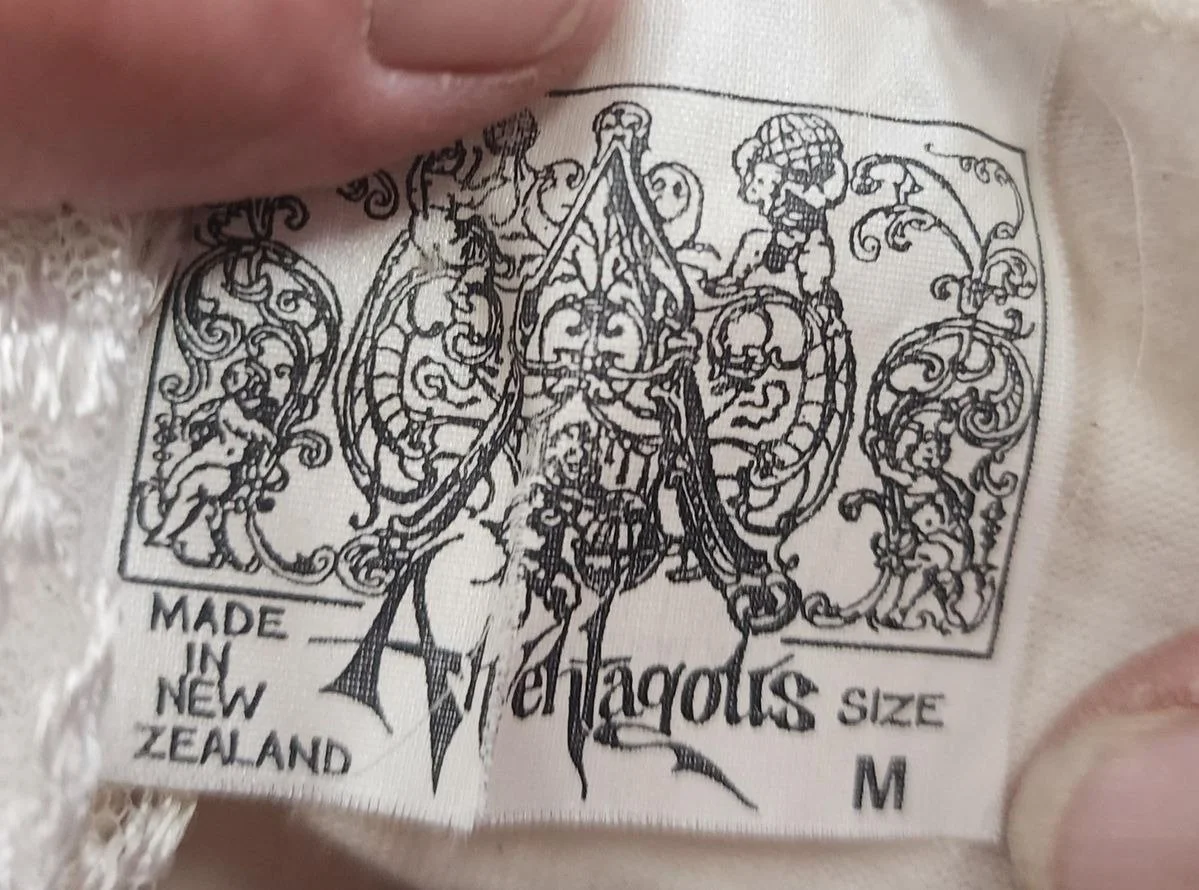
I grew up in NZ, there historically there has never been a big fashion scene although there have been so interesting labels, I always liked this label Anventagous which was a outside the traditional fashion scene and made medieval, gothic clothing - think lots of crushed velvet and lace and lace up bodices, jagged hemlines - very Stevie Nicks, but slightly on the trashy side. NZ is quite bohemian - or at least it used to be, so you would see women wearing these dresses and they would always smell a bit of incense and have crystal necklaces, that kind of thing. I love their brand logo too - very 90s medieval.
When something catches your eye, do you trust instinct or context first?
Definitely just instinct, just what inspires and interests me and hope others find it interesting and special like I do!
What’s an image that captures a moment that has stayed with you?
A Nun’s Cell by Isabella Widger, a Glasgow based artist, a piece I am lucky enough to own…
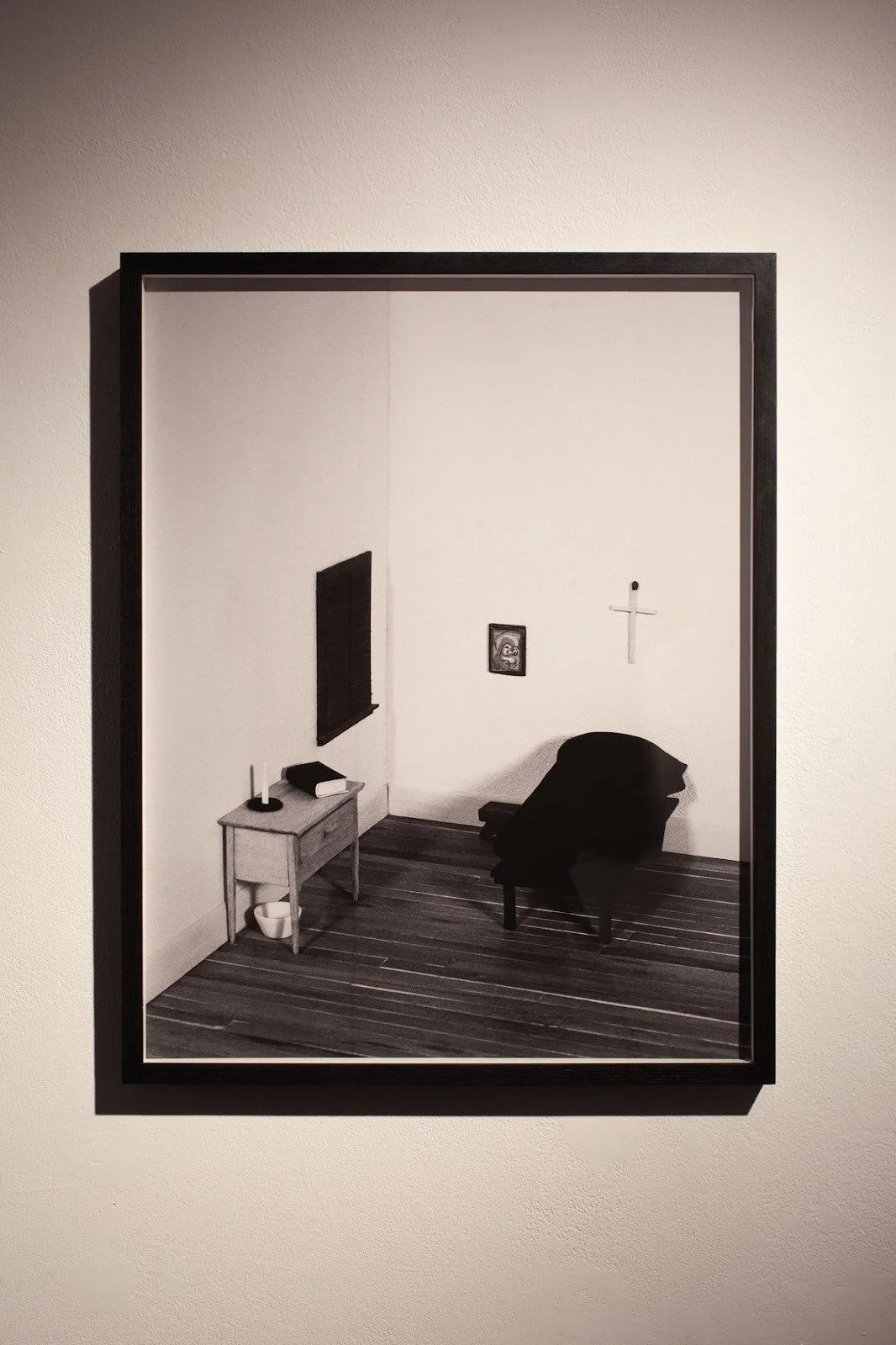
It is a photograph of a miniature set she created of a Nun’s room. I always love anything to do with Nuns, Monks and Monasteries, I associate them with mystical soothing peaceful feelings. I went to a catholic girls high school with nuns and a convent across the road growing up, so I suppose there is a certain nostalgic aspect as well for me. I love to visit the many monasteries here in Greece when I can. I have a small collection of religious objects like sanctuary lanterns and church candle holders and I went through a phase where I was very obsessed with relics and religious costumes so have a few interesting books on that also.
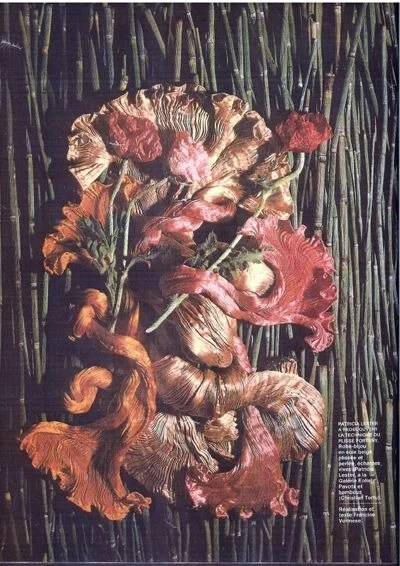
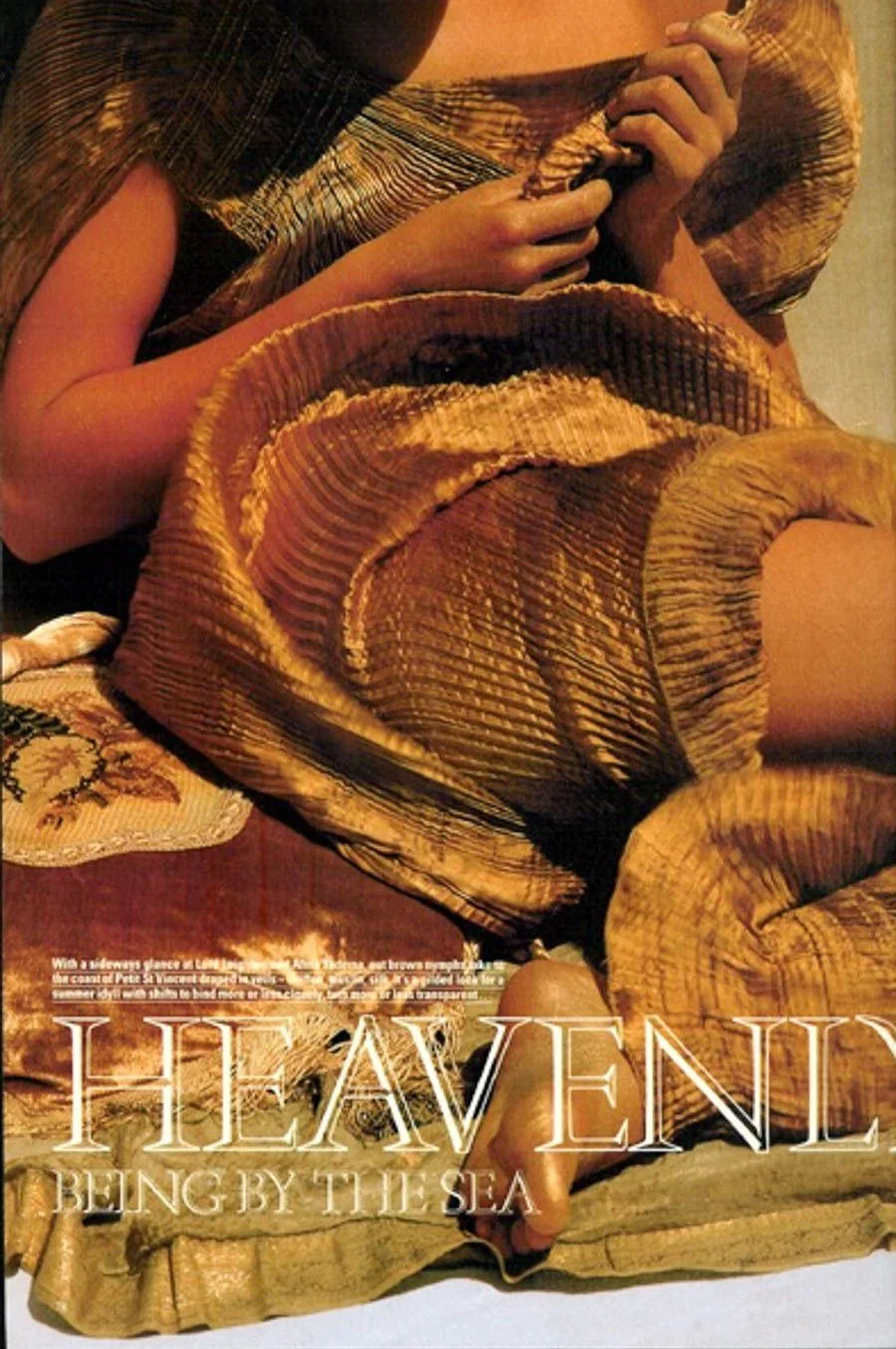
This image of Patricia Lester pleated silk shawls from French Elle circa 1980s (exact date unknown) has always been a favorite of mine - I always have this feeling when in nature where I want to become one with it, where a flower is so beautiful that you would like to wear it somehow and i think these pleated textiles almost bridge the boundary between the organic world and clothing - here they are crinkled and wrapped like like poppy petals which you can drape on yourself to wear.
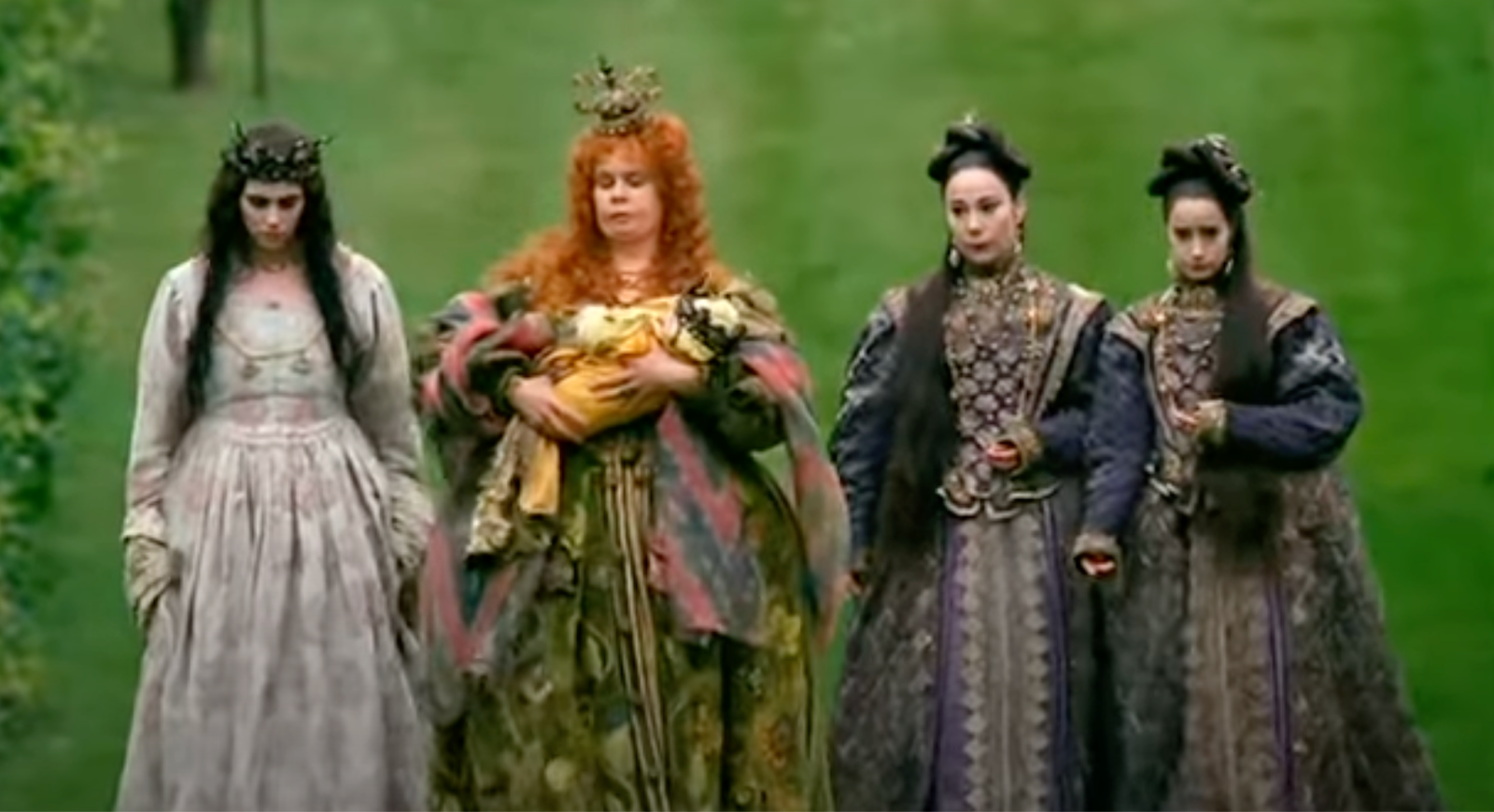
The Gormenghast miniseries (2000), an adaptation of Mervyn Peake’s novels is so magical, I love the maze of a castle, the devious twins Lady Cora and Clara and Lady Gertrude with her amazing bed chamber with all her white fluffy cats and white raven ‘Mr Chalk’.
Gormenghast truly transports you to such a special fantasy place. The kind of clothing, fashion runway, editorials and designers that interest me have this similar ability to suspend reality, to take you away to a fantastical world.
What advice would you give someone who wants to develop their taste and dig deeper into fashion history today, between online resources, social platforms, and physical archives, where should they start?
I get asked for tips about researching quite a lot, and the best answer I have is that you just have to have a constant curiosity to investigate everything, everywhere, and have a drive to find things which inspire you. Resources are everywhere — old magazines, books, old websites, Internet Archive, Wayback Machine, old newspaper archives like Newspapers.com, ProQuest, museum archives (many of which are digitised these days, or you can make a request to view), Facebook groups and communities. YouTube is amazing for finding old art TV shows that have fashion segments or old runways, but as always, it takes a bit of hunting. Keeping things filed well as you find them is important, as maybe later they might be of interest or connect to something else, so you want to remember where they came from and where they are!
I love reading old fashion articles and watching old media, so I guess I do that for a hobby really, and file away anything interesting as I come across it to investigate more deeply. I keep notebooks with ideas I would like to look into further and note any books or things like that which might be relevant to try to source.
My personal belief is that there is a lot of fashion history which is important and overlooked, and that a lot of fashion history which you might find in a textbook or might be taught at university is a bit of a tired and dated curriculum. I am particularly interested in fashion, clothing, or body adornment where it crosses boundaries into the art world or the craft world, and what you could perhaps call “outsider fashion designers.” I think there is a lot of interesting, unexplored material to be found there, and a lot of fresh inspiration for young designers to take from these areas.
If you could reimagine an 80s or 90s editorial today, which would it be and how would you restage it?
I have so many favorite 80s editorials, but one I always come back to is “Heavenly Being by the Sea,” UK Vogue 1985, featuring Patricia Lester and Fortuny pleated dresses, shawls, and fish bones for hair accessories.
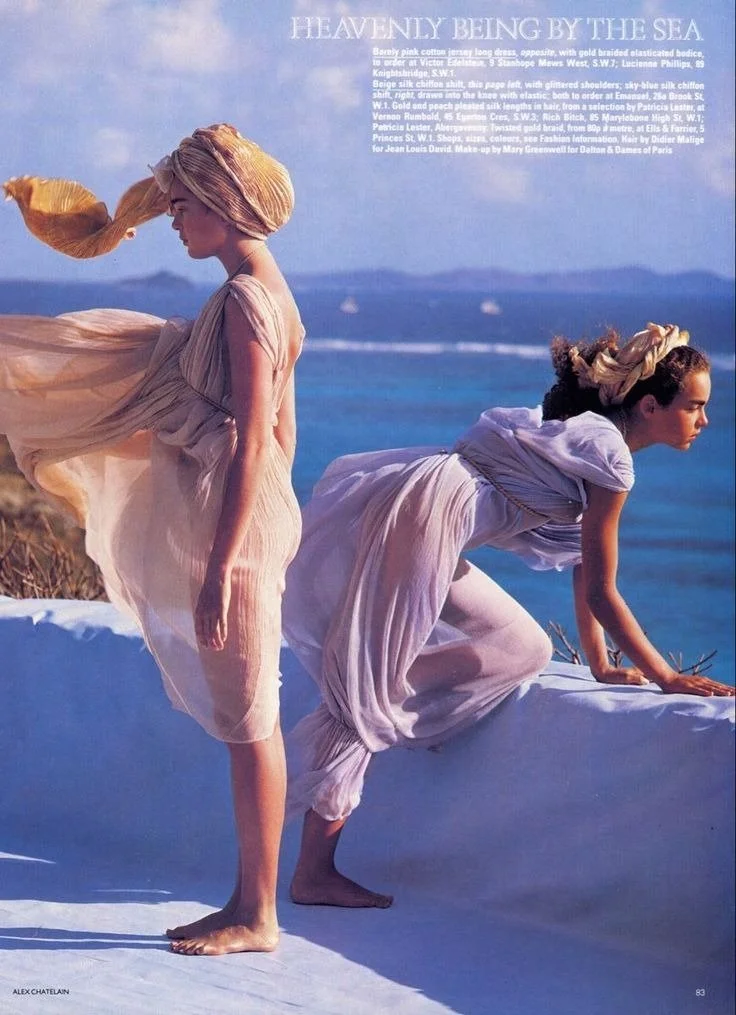
I would love to restage it by the sea here in Greece for fun, and maybe add more of a mermaid, mythological sea nymph, or siren influence.
Thanks for reading. TTYL!
